
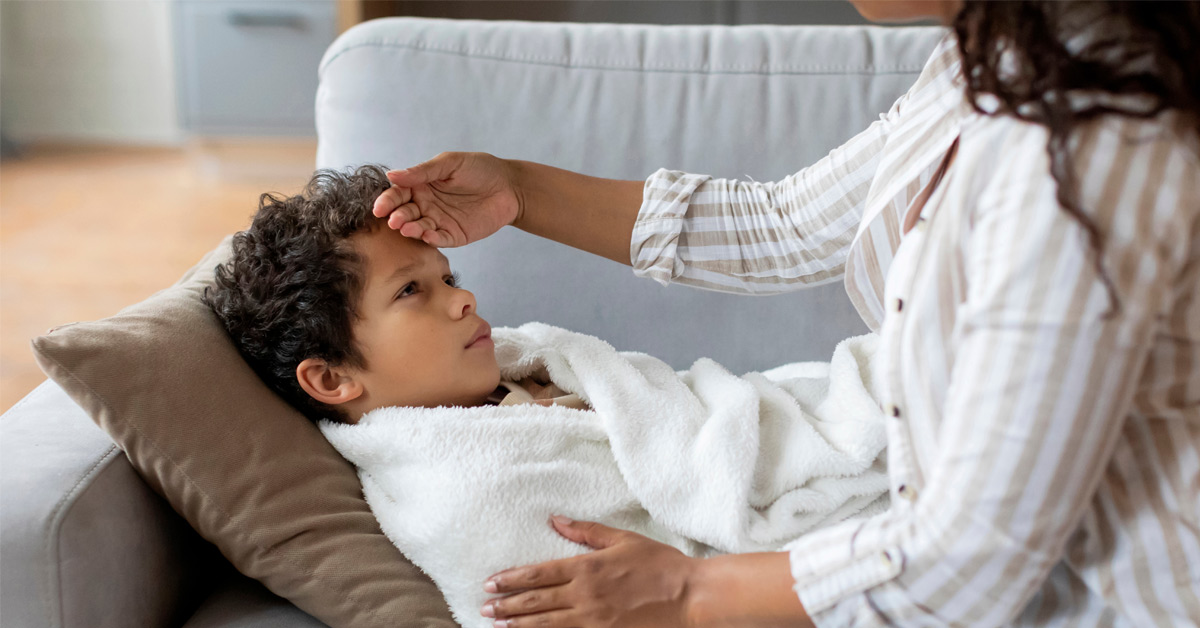
We’ve all felt the discomfort of a fever.
Hot and sweaty one minute. Wrapped in blankets the next. Add in exhaustion and headache, and it’s not exactly a party.
But when your child has a fever? That’s a different story. We want to make them feel better now. And if you don’t know what to do if your child has a fever, it can be stressful.
Here’s the good news: Fevers are common, especially in children. They’re usually a sign that your child’s body is fighting an infection, and they’re normally not dangerous.
But obviously, you want to make your child as comfortable as possible until their fever disappears. That’s where knowing what to do can make a difference.
First, What is a Fever?
A child has a fever when their body temperature is higher than 100.4°F. A fever is the body’s natural way of fighting infection. It raises its temperature to slow the growth of bacteria and viruses and help the immune system work better and fight the illness.
Fevers are usually temporary and resolve on their own within a few days.
Why Do Children Get Fevers?
Children can get a fever for many different reasons. Some of the most common causes of childhood fevers include:
- Viral infections like the common cold or the flu
- Bacterial infections such as strep throat, ear infections, or urinary tract infections
- Vaccination can sometimes result in a low-grade fever
- Heat-related reactions like heat exhaustion and overdressing for the weather
- Teething has been commonly associated with a fever. But it doesn’t usually cause an increase in temperature past 100.4°F.
What to Do If Your Child Has a Fever
When your child has a fever, it can be stressful. As parents and caregivers, we want to see our children happy and healthy, not uncomfortable and sick.
But don’t worry. A few simple tricks can put you and your child at ease.
Step 1: Get an Accurate Temperature
The first step is knowing what your child’s temperature is. Digital thermometers are a reliable, easy-to-use option for older children, but for infants or small toddlers, it’s usually more accurate to get a rectal temperature.
If your infant is under 3 months old and has a fever of 100.4 degrees Fahrenheit or higher, call your pediatrician immediately. If your child is older than 3 months and has a fever, it can often be managed at home, depending on the severity of the fever and your child’s overall condition.
Step 2: Keep Your Child Comfortable
A fever itself is generally not dangerous, but it can certainly cause your child some discomfort.
There are several ways to help your child feel better when they have a fever. Try dressing them in light clothing, increasing their fluid intake with water and electrolyte drinks, and ensuring they get plenty of rest.
Step 3: Administer Fever-Reducing Medications
When it comes to a fever, the rule of thumb is to treat your child, not just the fever. If your child has a fever but is acting normally, there’s no need to administer over-the-counter medications. But if your child appears uncomfortable, you might want to consider using a fever-reducing medication like acetaminophen (Tylenol) or ibuprofen (Advil or Motrin) to help lower the fever and reduce pain.
Before administering any medication to your child, check with your doctor to make sure it’s safe. And remember to administer the correct dose of the drug at the proper times.
When to Call the Doctor
Although most fevers will resolve on their own with or without a fever-reducing medication within a few days, there are some symptoms your child may experience that require a trip to the doctor or even the emergency room.
Signs and symptoms that something serious could be going on include:
- Persistent high fever for more than 3 days without improvement
- Your child is less than 3 months old
- The fever spikes above 104 degrees Fahrenheit
- Severe headache or neck stiffness
- Seizures
- Difficulty breathing
- Chest pain
- Severe abdominal pain or persistent vomiting
- Lethargy, confusion, or unresponsiveness
Should You Worry About a Fever?
A simple fever is not usually something you need to be too concerned about. Many times, it’s actually a good sign. It means that your child’s immune system is working to repair itself, and the fever will likely resolve within a few days.
But if you find yourself worried that your child’s fever might be due to something more serious, it may be time to call your pediatrician, especially if any concerning symptoms accompany the fever.
If you’re wondering what to do if your child has a fever, take advantage of our walk-in pediatrician services in Amory and Starkville. There’s no need to make an appointment – come in during office hours and we’ll help your child feel better as soon as possible!