
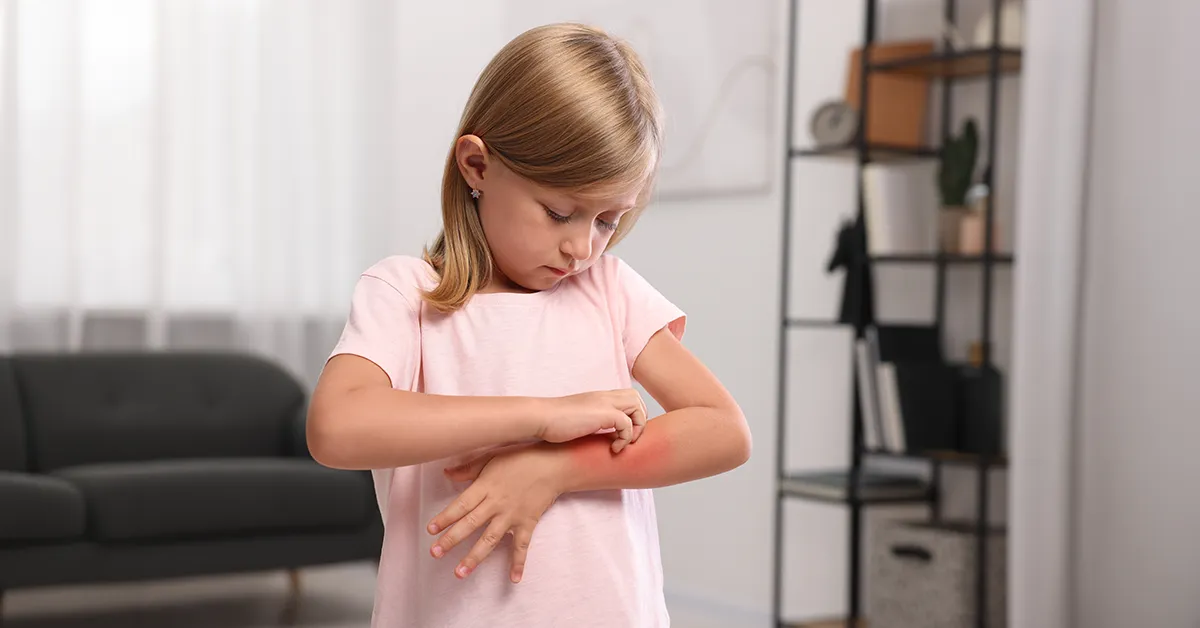
A new rash on your child can be hard to figure out. Is it an allergy, a virus, or something that touched their skin?
Common skin rashes in children can have many causes. Where the rash appears, what it looks like, and whether your child has other symptoms can offer clues.
9 Common Skin Rashes in Children
1. Eczema
Eczema, also called atopic dermatitis, causes dry, itchy skin. Babies often get it on the cheeks, scalp, arms, and legs. In older children, it often appears in the folds of the elbows and knees.
A thick, fragrance-free moisturizer, short lukewarm baths, and gentle cleansers can help. Your child’s doctor may prescribe medicine for more severe flares.
2. Contact Dermatitis
Contact dermatitis happens when the skin reacts to something it touches, such as soap, poison ivy, or adhesives.
The rash may be red, itchy, swollen, dry, or blistered. Avoiding the trigger is the first step. Cool compresses and moisturizer may also soothe the skin.
3. Hives
Hives are raised, itchy welts that can develop with a viral illness or after exposure to certain foods, medicines, or insect stings.
The welts may disappear within hours and show up somewhere else. Mild hives may go away on their own. An antihistamine may help with itching.
Get emergency care if your child also has trouble breathing or swelling of the lips, tongue, or throat.
4. Diaper Rash
Moisture and friction cause most diaper rashes. Frequent diaper changes, time without a diaper, and a thick barrier ointment with zinc oxide can help.
A bright red rash that spreads into the skin folds may be caused by yeast, especially after antibiotics. Your child may need an antifungal cream.
5. Impetigo
Impetigo is a contagious bacterial skin infection. It causes small blisters or sores that break open and form yellow or honey-colored crusts, often around the nose and mouth.
Your child’s doctor may treat impetigo with an antibiotic cream or oral antibiotic.
6. Ringworm
Ringworm is a fungal infection, not a worm. It often causes a round, itchy, scaly rash with a raised edge and clearer skin near the center.
It can spread from people, animals, or shared items. An antifungal medicine applied to the skin can usually clear ringworm on the body.
7. Hand, Foot, and Mouth Disease
Hand, foot, and mouth disease is a viral illness that can cause fever, painful mouth sores, and spots or blisters on the hands and feet. A rash may also appear on the buttocks, arms, or legs.
Most children get better within 7 to 10 days. Fluids and medicine for pain or fever can keep your child more comfortable.
8. Fifth Disease
Fifth disease often starts with mild cold symptoms, followed by a bright red rash on the cheeks. A lacy rash may then spread to the arms, legs, or body.
Most children need only rest, fluids, and medicine for fever or discomfort.
9. Roseola
Roseola usually starts with several days of high fever in babies and toddlers. As the fever goes away, a pink rash appears on the chest or belly and may spread.
The rash does not need treatment. Fluids and medicine for fever can help while your child is sick.
When Common Skin Rashes in Children Need Medical Care
Call your child’s doctor if a rash:
- Is painful or spreading quickly
- Shows signs of infection
- Comes with a fever that does not go away
- Causes blisters or peeling skin
- Does not improve with home care
Seek emergency care for a rash with trouble breathing or swelling of the lips, tongue, or throat.
If you’re not sure what is causing your child’s rash, schedule a visit or walk-in at P&S Clinic in Amory or Starkville. A pediatric provider can find the cause and recommend the right treatment.
Related:
Does Your Child Have Food Allergies? 6 Label Reading Tips to Keep Them Safe
FAQ: Can Allergies Cause Sore Throat?
Walk-In Pediatric Appointments Available in Amory and Starkville